
Stress in sheep shearing
DOI:
https://doi.org/10.14409/favecv.2024.23.e0035Keywords:
shearing, stress, animal welfareAbstract
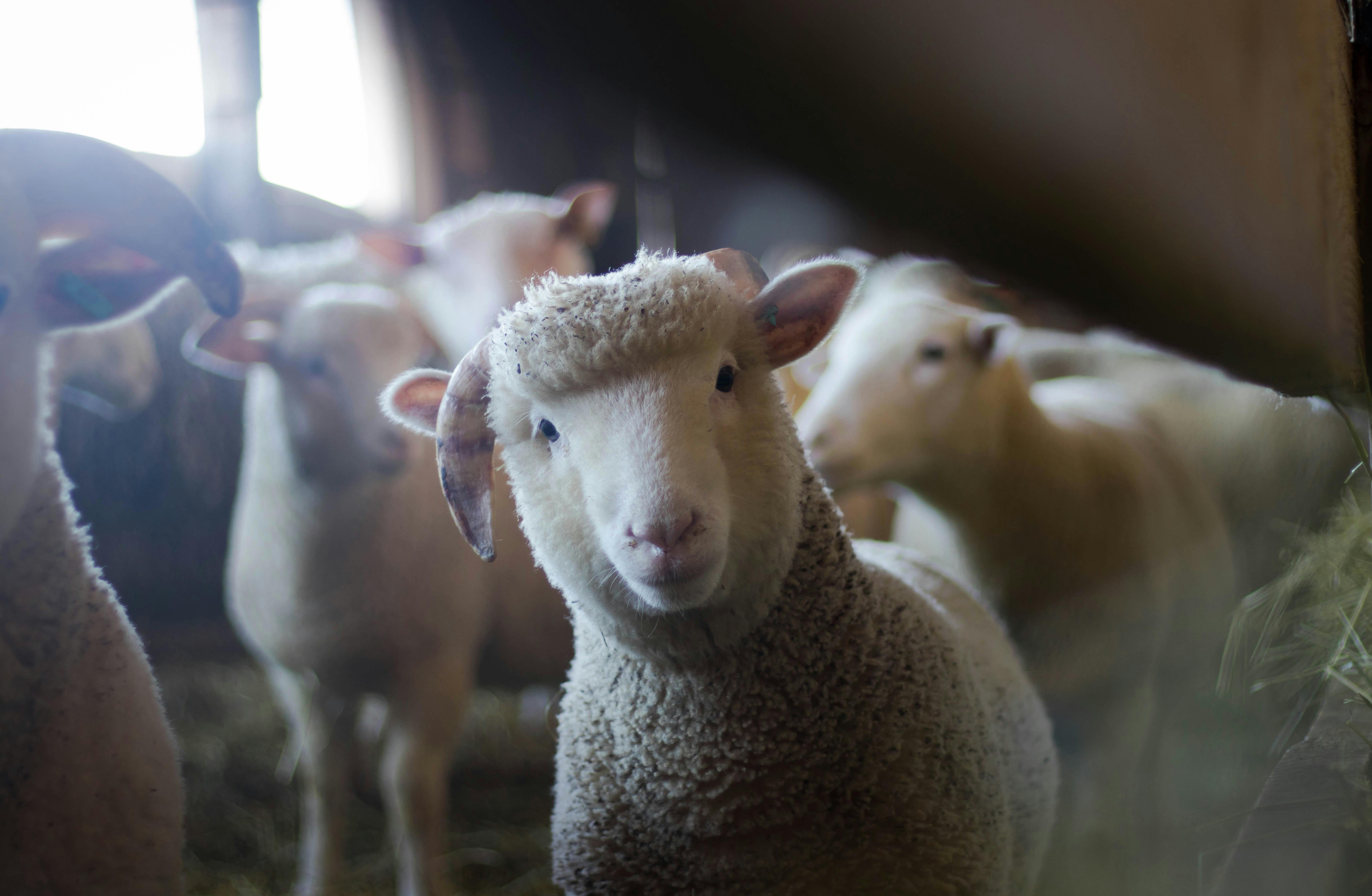
Shearing represents an acute stress for animals, the stress response of sheep during shearing has been described, but there is limited information on which factors trigger this response. With the Tally-Hi shearing method, the animals seem to be calmer than with traditional shearing with tied animals; the procedure has been improved and spread in recent years in Argentina. Our objective was to evaluate the effect of Tally-Hi shearing on the stress response in sheep; 20 2-year-old Merino breed females were randomly selected and two groups were formed. A: without shearing B: with shearing, all received the same peri-shearing management. Four whole blood samples were taken at different times: pre-shearing, immediately after shearing, 24 hours and 7 days post-shearing and glucose, total protein and cortisol levels were measured. No significant differences were found between the groups, but we observed a variation of both groups over time. We can conclude that the refinement of the shearing process (choice of the unmanaged Tally Hi method and operator training) was appropriate and does not generate additional stress to the peri-shearing management used in the Pilcaniyeu Experimental Field (herding, penning and vaccination).
References
Arfuso F, Fazio F, Chikhi L, Aymond G, Piccione G, Giannetto C. 2022. Acute Stress Response of Sheep to Shearing Procedures: Dynamic Change of Cortisol Concentration and Protein Electrophoretic Pattern. Animals 12: 862. DOI: 10.3390/ ani12070862
Corner RA, Kenyon PR, Stafford JK, West DM, Oliver DH. 2006. The effect of midpregnancy shearing or yarding stress on ewe post-natal behaviour and the birth weight and post-natal behaviour of their lambs. Livest. Sci. 102: 121-129. DOI: 10.1016/j.livprodsci.2005.12.001.
Gunn W. 1963. Australian Wool Board report to woolgrowers. Ed. Australian Wool Board, Melbourne. 41pp.
Hargreaves AL y Hutson GD. 1990. The Stress Response in Sheep during Routine Handling Procedures. Appl. Anim. Behav. Sci. 26: 83-90. DOI: 10.1016/0168-1591(90)90089-V.
Hefnawy A, Helal MAY, Sabek A and Shousha S. 2018. Clinical, behavioral and biochemical alterations due to shearing stress in Ossimi sheep. J. Vet. Med. Sci. 80: 1281-1286. DOI: 10.1292/jvms.18-0150.
Jephcott EH, McMillen IC, Rushen JP, Thorburn GD. 1987. A comparison of the effects of electroimmobilisation and, or, shearing procedures on ovine plasma concentrations of beta-endorphin/beta-lipoprotein and cortisol. Res. Vet. Sci. 43: 97-100. DOI:10.1016/S0034-5288(18)30750-1.
Lowry OH, Rosebrough NJ, Farr AL, Randall RJ. 1951. Protein measurement with the Folin phenol reagent. J. Biol. Chem. 193: 265-275. DOI:10.1016/S0021-9258(19)52451-6.
Piccione G, Caola G, Refinetti R. 2002. Effect of shearing on the core body temperature of three breeds of Mediterranean sheep. Small Rumin. Res. 46: 211-215. DOI: 10.1016/S0921-4488(02)00192-X.
PROLANA, Programa para el Mejoramiento de la Calidad de la Lana, 1994. Documentación técnica. Disponible en: https://magyp.gob.ar/sitio/areas/prolana/documentacion/
Sanger ME, Doyle RE, Hinch GN, Lee C. 2011. Sheep exhibit a positive judgement bias and stress-induced hyperthermia following shearing. Appl. Anim. Behav. Sci. 131: 94-103. DOI: 10.1016/j.applanim.2011.02.001.
Ungerfeld R y Freitas-de-Melo A. 2019. Stress and behavioural responses to winter shearing differ between pregnant and non-pregnant ewes. Physiol. Behav. 210: 112653. DOI:10.1016/j.physbeh.2019.112653
Downloads
Published
Issue
Section
License
Copyright (c) 2024 María M. ODEON, Andrea K. CANCINO, Diego CRISTOS, Sonia A. ROMERA

This work is licensed under a Creative Commons Attribution-NonCommercial-ShareAlike 4.0 International License.
FAVE Sección Ciencias Veterinarias ratifies the open access model, in which contents (in full) are available free to anyone in the internet. The costs of production and publication are not transfered to the authors. This policy intends to break social and economical barriers that generate inequities in the access to information, and for the publication of research results.
All articles can be accessed at http://bibliotecavirtual.unl.edu.ar/publicaciones/index.php/FAVEveterinaria/issue/current/, under license Creative CommonsAtribución-NoComercial-Compartir Igual 4.0 Internacional.